

July 8, 22026 By Carol Britton Meyer
Electric bikes (often referred to as e-bikes) are growing in popularity, including in Hingham and other South Shore communities.
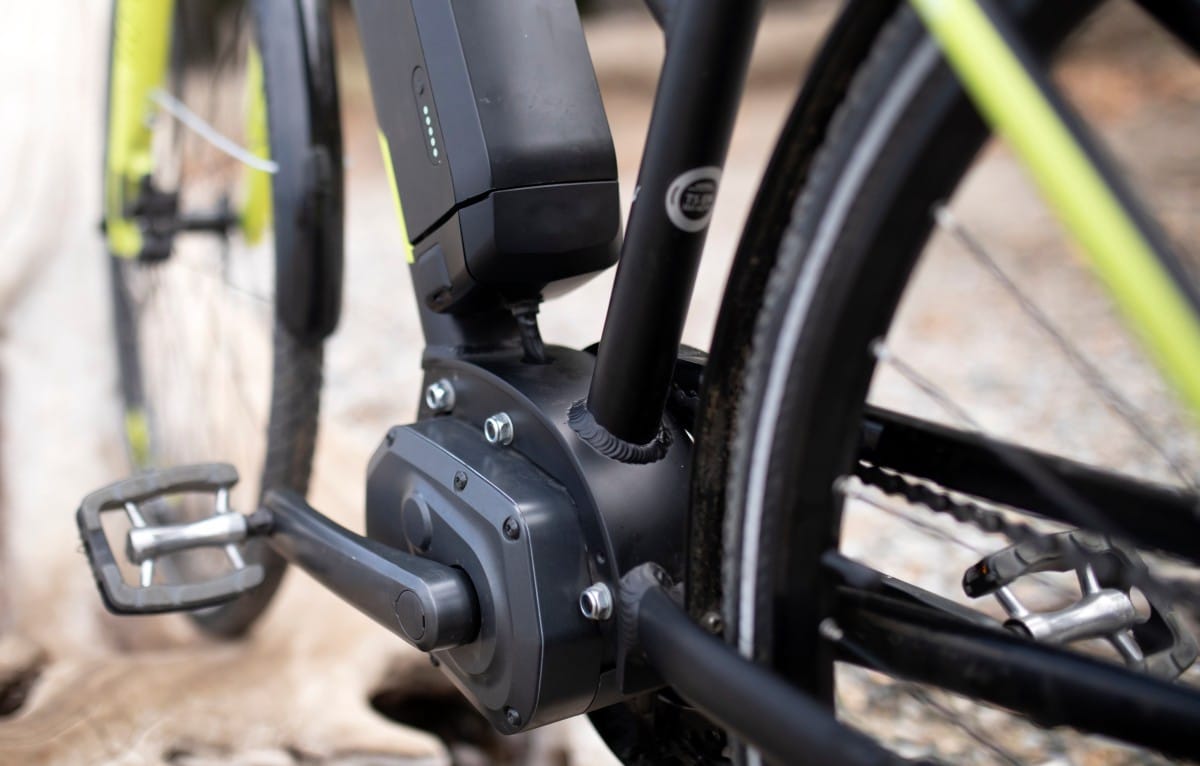
Electric bikes look a lot like non-electric bikes but are equipped with a rechargeable battery and a small electric motor to assist riders in pedaling faster and farther.
“We see e-bike riders of all ages,” Hingham Police Department Patrol Officer Benjamin Carr told the Hingham Anchor, which reached out to him for safety tips and other guidance to share with the public.
It is important for motorists to abide by the same precautions when it comes to e-bikes riders as they do with bicyclists. “E-bikes, for all intents and purposes, are bicycles and are permitted to share the roadway with motor vehicles,” Carr said. “Riders must remember, however, that they are required to follow all traffic laws, including obeying stop signs and traffic lights.” E-bikes are not allowed to be operated on sidewalks.
E-bike riders may ride side by side, but no more than two abreast, and only if doing so does not impede motor vehicle traffic. “Motor vehicle operators may overtake riders when safe to do so and must give four feet of distance between the vehicle and e-bike rider or cyclist. E-bike riders must operate within designated bike lanes or multi- or shared-use paved trails,” he explained.
One of the biggest issues the HPD is encountering, Carr said, is that people are not educating themselves on the laws surrounding e-bikes “and young riders are being given e-bikes that, in some cases, are capable of reaching speeds of 50 mph. These riders do not have the experience, training, or skills necessary to safely operate these e-bikes, and we are beginning to see the consequences of that inexperience more frequently.”
When asked how many other incidents involving e-bikes, if any, there have been in Hingham recently beyond the June accident involving a young boy who was injured when a rider on an e-bike hit his bicycle – Carr explained that “it’s difficult to give an exact number due to the fact that our reporting software does not differentiate between traditional bicycles and e-bikes. Additionally, many of our calls involving e-bikes are not crashes or accidents and are of a public disturbance nature. For instance, individuals are riding too fast on sidewalks or operating dangerously in traffic, and someone will call to have that situation addressed.”
E-bikes are bicycles fitted with a small electric motor designed to assist with propulsion. Currently in Massachusetts there are two classifications of e-bikes. Class One is a bicycle with an electric motor that provides assistance only when pedaling and ceases to provide assistance once the bicycle exceeds 20 mph, Carr explained.
Class Two e-bikes are bicycles fitted with a throttle-actuated motor that can propel the bicycle without pedaling, but will cease to provide power when the bicycle exceeds 20 mph. Unlike many other states, Massachusetts has not defined a Class Three e-bike.
“Because of this, any e-bike that exceeds Class One and Class Two can be considered a ‘motorized bicycle,’ or what is commonly referred to as a ‘moped,’” according to Carr. “This means that any e-bike that would fall into this category of being considered a motorized bicycle would be subject to registration and license requirements.”
Class One and Class Two e-bikes, “which are what people would typically think of when they think of e-bikes, are not required to be registered,” Carr said. “The problem then arises when much more powerful machines are marketed as e-bikes but do not qualify as an e-bike under Massachusetts General Law. These would require registration, but because of how they are marketed, operators do not think that they must be registered. These much more powerful ‘e-bikes,’ or motorized bicycles, share many similarities with small displacement motorcycles, and riders would benefit from training similar to that of an introductory motorcycle course.”
Carr explained that e-bikes can be of particular benefit to older individuals, allowing them to go on bike rides and stay active “while enduring far less stress than a traditional bicycle would cause.”
There can also be dangers involved, such as when e-bikes are operated in a manner that exceeds the skill of the rider or in prohibited areas that present a danger to pedestrians.
“Another issue that increases the risk to e-bike riders is when they do not have proper safety equipment and/or have a passenger, which affects the balance of the bike and the focus of the operator,” Carr said.