

May 6, 2026 By Hilary Hosmer
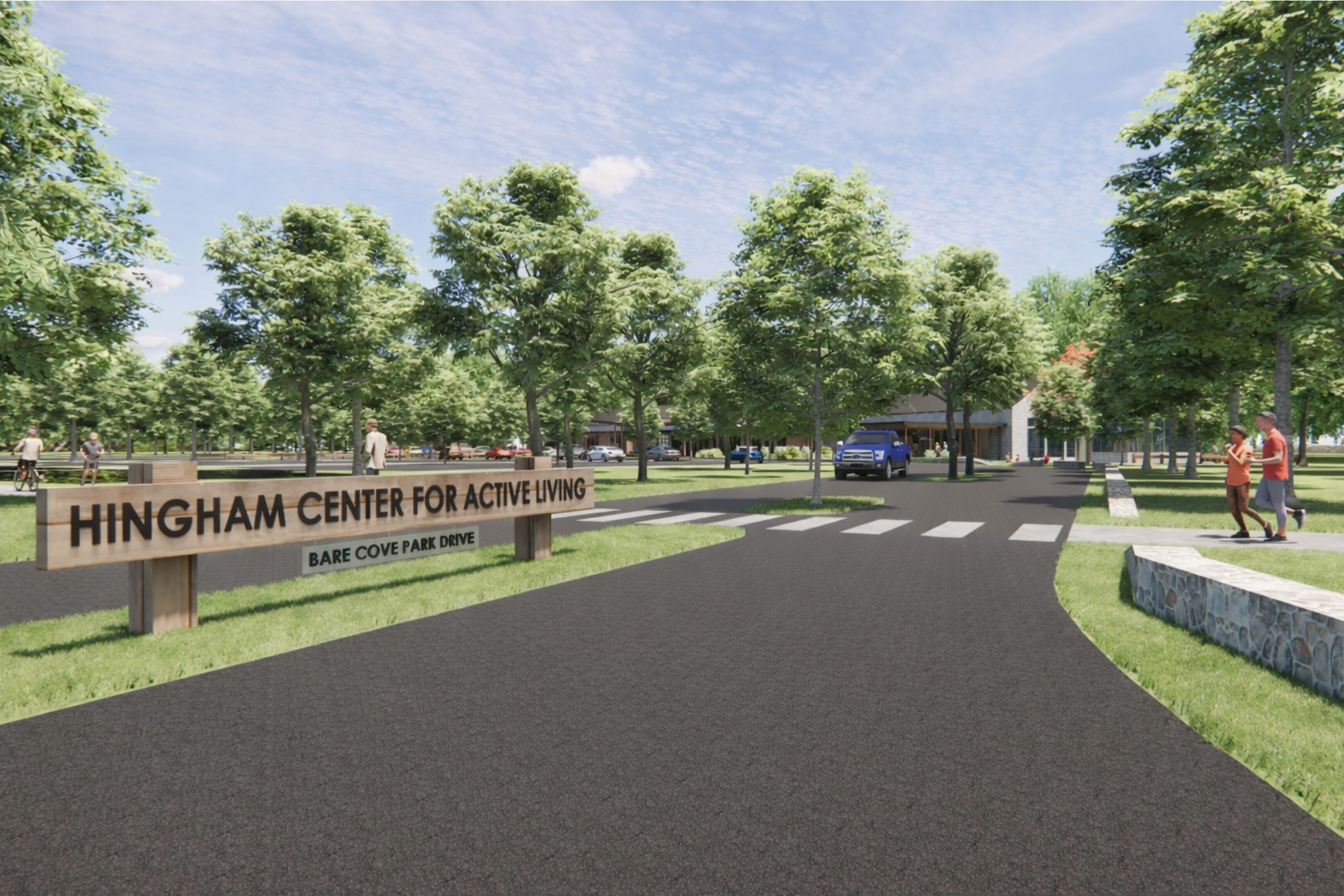
With Town Meeting voters rejecting a proposal to build a new senior center in Bare Cove Park, local officials now face a pivotal question: what comes next?
The vote on April 27, 2026 indicates that relying exclusively on municipally owned land—a constraint originally intended to simplify development and avoid the cost, delay, and uncertainty of acquiring private property – may have been short-sighted. If Hingham still wants a modern, adequately sized senior center, leaders will need to broaden their approach—beginning with opening the process to privately owned sites.
Expanding the Search
The most immediate step is procedural: the town should issue a formal Request for Information (RFI) or Request for Proposals (RFP) inviting private property owners to submit potential sites. This process would allow landowners, developers, and institutions to put forward parcels that meet baseline criteria such as size, accessibility, environmental suitability, and proximity to population centers.
Such an open call shifts the dynamic. Instead of the town trying to fit a complex project onto a limited set of public parcels, it allows the market to surface options that may not have been previously considered—underutilized commercial properties, large residential lots, or parcels already positioned for redevelopment.
Defining Clear Criteria
Before soliciting proposals, town officials will need to establish transparent siting criteria. These should include:
- Minimum acreage and configuration requirements
- Traffic access and parking feasibility
- Environmental impact considerations
- Walkability and proximity to senior populations
- Cost parameters, including acquisition and site preparation
Clarity at the outset will help avoid repeating past conflicts and ensure that any shortlisted sites are viable both technically and politically.
Funding and Feasibility
Opening the process to private land introduces new financial variables. Land acquisition costs could be significant, but they may be offset by opportunities for partnership. For example, the town could explore:
- Land swaps or partial donations
- Public-private partnerships with developers
- Co-location with other community or healthcare services
- Adaptive reuse of existing structures, such as the Hitchcock Shoe building at 225 Beal Street and adjoining parking lot.
At the same time, a fresh feasibility study may be warranted to compare total project costs across a wider range of scenarios, including renovation versus new construction.
Community Engagement, Early and Often
If the Bare Cove debate demonstrated anything, it is that site selection cannot be treated as a purely technical exercise. Public sentiment – especially around environmental preservation – will shape the outcome.
Going forward, officials may benefit from reengaging residents and seniors in the process. Public forums, transparent evaluation matrices, and regular updates could help build trust and reduce the risk of late-stage opposition.
A Reset, Not a Dead End
While the Town Meeting vote halted one proposal, it did not eliminate the underlying need. Hingham’s senior population continues to grow, and the limitations of the current center remain widely acknowledged.
The path ahead is more complex than originally envisioned. But by expanding the search beyond municipal land, the town has an opportunity to identify a solution that is both functional and broadly supported.
The next phase will test whether Hingham can translate that opportunity into consensus.