

Monday, June 15, 2026 by Carol Britton Meyer (courtesy photos)
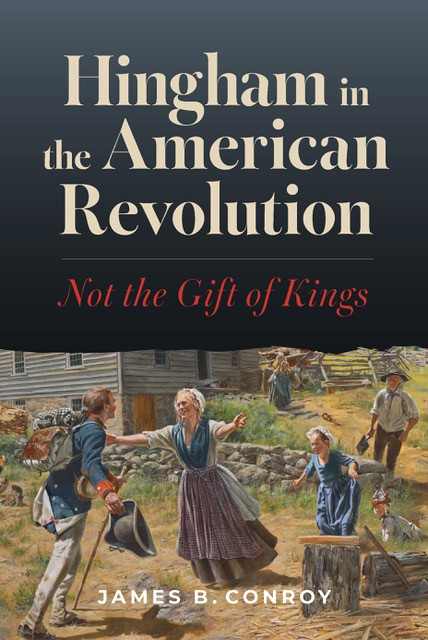
Hingham Historical Society will host a kickoff event surrounding the recent publication of Hingham resident Jim Conroy’s latest book – “Hingham in the American Revolution: Not the Gift of Kings” on Thursday, June 18 at 5 p.m.
Conroy will do a short reading, and signed copies of the book will be available for purchase. Some of the historical items mentioned in the book will be on display. The event is free and open to the public, and all are welcome.
Conroy wrote the book pro bono, with all proceeds benefitting the Society. Executive Director Deirdre Anderson was the editor and the Society the publisher.

“We’re so fortunate to have such a successful, willing, and generous author, who also serves on the Society’s board of trustees and is the town historian, to write this book,” Anderson told the Hingham Anchor. “Jim was fabulous to work with and didn’t miss a deadline!”
The book was published and bound locally. “It’s professionally done and a beautiful keepsake of Hingham’s legacy to the 250th anniversary [of the signing of the Declaration of Independence],” she said.
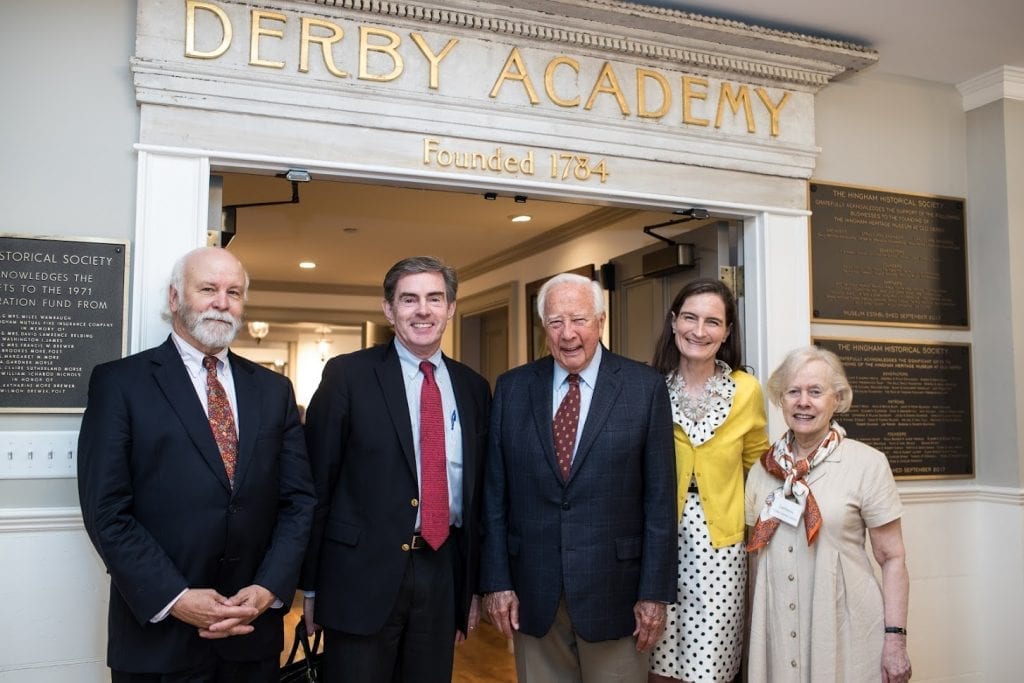
‘A fascinating tale of the birth of the American Dream’
As described on the book jacket, “Fueled by vivid letters, candid diaries, and long forgotten first-person narratives, ‘Hingham in the American Revolution: Not the Gift of Kings’ is the character-driven story of an up-and-coming coastal town unmoored by mass rebellion at a turning point in history. Its cast draws from every level of 18th century Hingham society – from Major General Benjamin Lincoln, Washington’s trusted friend and second in command, to a young English girl under house arrest in Hingham, to the townsmen who played key roles in the runup to the Revolution, fought in every major battle, and lived to tell the tale. Some convinced their complacent neighbors to resist encroaching tyranny. Others did their best ‘to keep the past upon its throne.’ Together they tell a fascinating tale of prerevolutionary politics, cultural change, a familiar place at a different time, a tragic civil war, and the birth of the American Dream.”
The “to keep the past upon its throne” quote refers to Tories and is part of Ralph Waldo Emerson’s line about British soldiers who died at Lexington and Concord, Conroy told the Hingham Anchor.
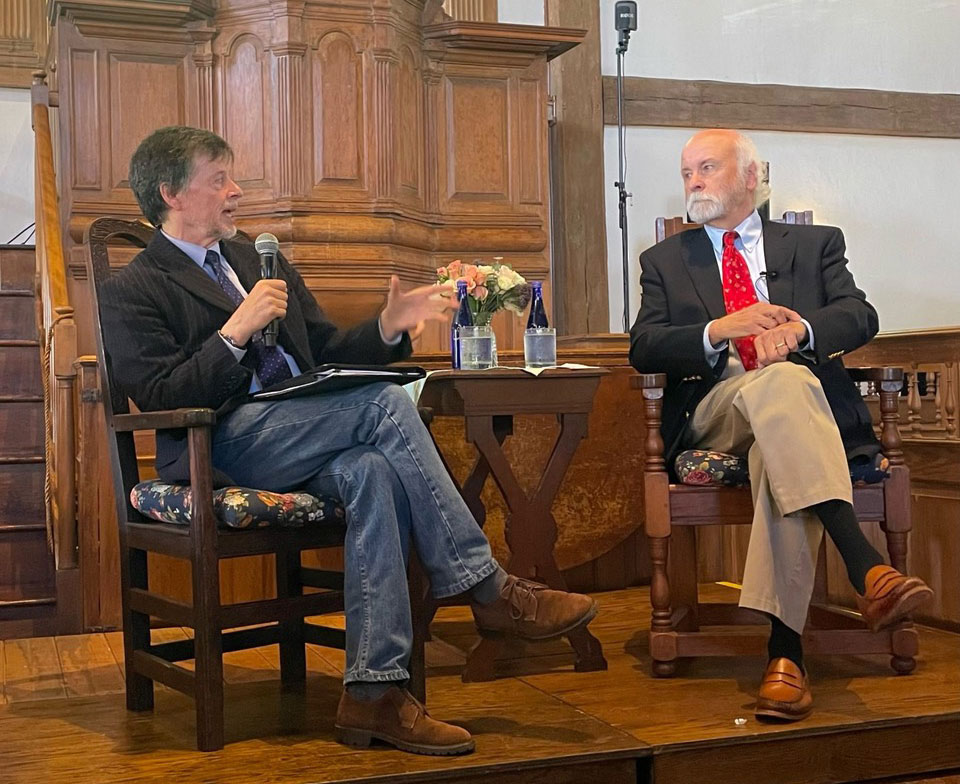
The publication of Conroy’s book follows the publishing of numerous historical books about Hingham in the past as part of a tradition going as far back as 1890, when a town history was published, “These books have served Hingham’s history well, and for the 250th, we knew it was time for a new book – about the town’s extraordinary role in the American Revolution,” Anderson said. “Jim’s book really highlights what we would like Hingham’s new generation to understand – that our town played an out-sized role in the American Revolution. We never want our community to forget that.”
Conroy explained the meaning of the book’s title. In 1774 Parliament took full control of the colony’s judges in the name of the crown. When the Superior Court opened in Boston, all 22 grand jurors refused to serve. A Hingham farmer named Samuel Hobart and Paul Revere were among them, and they published a unanimous statement of their reasons. To serve in such a court, it said, would betray the “sacred rights of our native lands, which were not the gift of kings” but bought with their ancestors’ blood, toil, and treasure.
‘I enjoy having written’
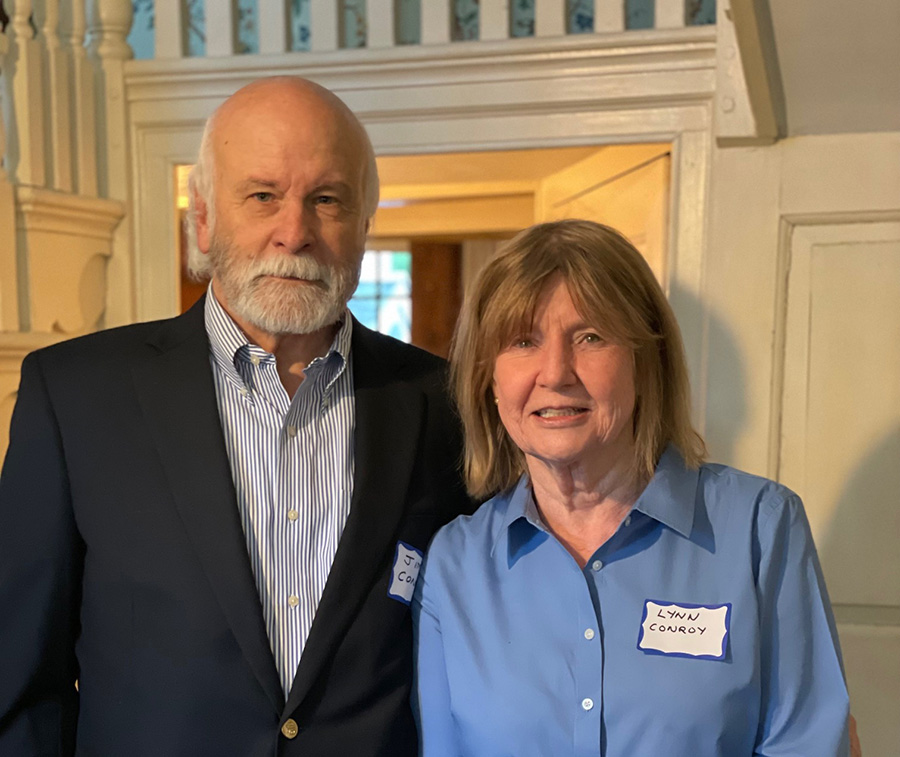
When asked about his favorite part of writing “Hingham in the American Revolution: Not the Gift of Kings, ” Conroy went with William F. Buckley, Jr.’s comment when he was asked if he enjoyed writing: “I enjoy having written.”
For Conroy, “the research is most of the fun – finding interesting little insights into real people’s character and experience in diaries, letters, and bits of information that no one may have read for centuries; seeing one piece fit into another and start to form a picture. That sort of thing is fun,” he said.
Conroy further summarized the book in his own words as a “character-driven story of a prosperous, sensible town pushed step by step into violent revolution — the Patriots and the Tories, the men who fought in every major battle of the war, and the women who made it possible on the home front with a squadron of British warships three miles away as the seagull flies.”
When the idea of such a book occurred to him two years ago, Conroy wondered whether enough diaries, letters, and other primary sources still existed to support one. However, “By the time we were done, we were keeping the book to a reasonable size by weeding out the weaker ones and keeping the best ones in.”
As it turned out, Hingham men and women played significant roles in the run up to the Revolution and beyond — the Boston Tea Party, the trial of the British soldiers after the Boston Massacre, Lexington and Concord, Bunker Hill, Saratoga, the crossing of the Delaware, the Battles of Trenton, Princeton, and Brandywine, and the siege and surrender at Yorktown.
“We are fortunate to have a surprisingly rich array of firsthand accounts of what those people saw, did, and experienced — all of them vivid, some of them amusing, and many of them moving,” Conroy said.
Residents provided material for book
Hingham residents Michael Studley and Phil Shute provided material for the book. Studley’s ancestor Lt. Thomas Burr fought in New York under Major General Benjamin Lincoln and lent Conroy a copy of his diary.
Shute is a descendant of Dr. Daniel Shute Jr., Alexander Hamilton’s battalion surgeon at Yorktown. “He too kept a diary, a handwritten book of medicinal recipes, and account books,” Conroy explained. “Phil and Jane Shute were kind enough to share the originals. By the time I gave them back intact, with a certain sense of relief, I felt as if I knew him.”
Conroy was “deeply moved by the sacrifices the people of this town endured in the Revolutionary Era to save their rights and liberties, not only for themselves and their families but also for what they often called ‘our progeny,’” Conroy shared. “Now it’s up to us to preserve what they saved for ours. I don’t think I’ll ever walk or drive through Hingham again without thinking about the remarkable men and women who lived here. To get to know and begin to understand them adds a new dimension to it all.”