

October 31, 2025 by Vanessa Webb
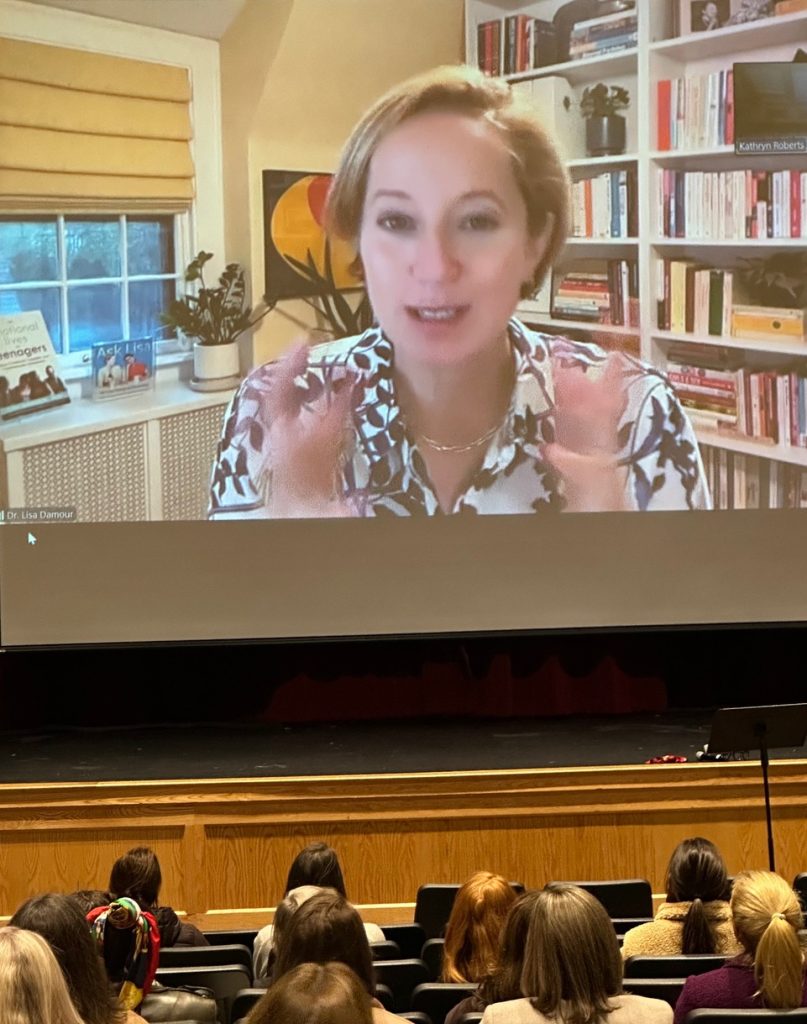
On October 23rd, parents, educators, and caregivers from across Hingham gathered at the Hingham Middle School auditorium for An Evening with Dr. Lisa Damour, sponsored by Hingham Public Schools and the Town of Hingham Opioid Settlement Funds. Dr. Damour, a New York Times bestselling author, clinical psychologist, and host of Ask Lisa: The Psychology of Parenting podcast, joined via live video to share her insights on helping teens and tweens navigate the emotional ups and downs of adolescence.
Mental health does not equal feeling good
She began by acknowledging what so many parents feel: It’s a really hard time to raise kids. And while the increased attention to mental health is positive, she noted that the concept itself is often misunderstood. Too often, we equate mental health with “feeling good.” In reality, she explained, true mental health is about two things: 1) having feelings that make sense for the situation, and 2) being able to manage those feelings effectively.
That ability to manage emotions, Dr. Damour explained, comes down to coping, and not all coping is created equal. Healthy coping includes both expressing and taming emotions, e.g. talking/venting, doing something active to blow off steam, listening to music, or seeking creature comforts. Unhealthy coping, on the other hand, can look like substance use, taking pain out on others, or turning it inward.
“Helping teens recognize these differences, and modeling healthy coping ourselves, is one of the most powerful things adults can do,” she said, adding that “teens are remarkably good at finding healthy ways to cope.”
Discomfort Isn’t the Enemy
If there was one message Dr. Damour hoped parents would take home, it was the importance of being a steady presence. “We hate seeing our kids in pain,” she said. “Our instinct is to fix things or make the discomfort go away.” But, she reminded the audience, discomfort isn’t a sign something’s wrong, it’s often where the learning and growth happen.
She explained that emotions are informational, much like physical pain, they tell us there’s something we need to pay attention to. And our teens’ ability to handle distress often depends on our ability to tolerate their discomfort. “The kids who can tolerate discomfort,” she said, “are going to have more options in life. Those who can’t, will feel constrained.”
Dr. Damour reassured parents that big emotions are absolutely normal for adolescents, it’s part of how their brains develop. “It’s like their brains are undergoing a massive renovation project,” she explained. The emotional systems mature much earlier than the systems for managing emotions, so there’s a gap and that gap is what we see as volatility or moodiness.
Friend Groups, Sleep, and Stress
One of the more reassuring points of the evening came when Dr. Damour addressed social dynamics. “Teens don’t need a big group of friends to thrive,” she said. “One or two close, reliable friendships is plenty. It’s the quality of connection that matters, not the quantity.”
On the practical side, Dr. Damour highlighted one high-impact way parents can help: protecting their teen’s sleep. “Sleep is one of the biggest buffers against stress and anxiety,” she noted. And one of the most effective ways to protect it? Keep technology out of bedrooms overnight. While not always easy, it’s a meaningful boundary that can make a real difference in teens’ emotional health.
She also addressed a question from the audience about school stress, emphasizing that stress itself is not bad. “We’re built to have a stress response,” she explained. “It’s what helps us prepare for challenges like a big test or performance.” What matters, she said, is that there’s time for reset and recovery built in, another reason why good sleep is so important.
When to Worry
While much of Dr. Damour’s talk focused on normalizing big emotions as a healthy and expected part of adolescence, she also addressed the question on many parents’ minds … when should we worry?
While big emotions and rough days are part of being a teenager, she encouraged parents to pay attention when distress lingers, or unhealthy coping takes hold.
“There’s no one-size-fits-all timeline,” she said. “You know your kid. If they seem stuck in a dark or low mood, or can’t bounce back, that’s the time to reach out … talk with your pediatrician or a mental health professional.”
Empathy Over Advice
As the evening wrapped up, Dr. Damour reminded parents that sometimes, the best support is simple empathy. “Offer empathy before advice,” she said. “Sometimes all they need to hear is, ‘Geez, I’m so sorry, that really stinks.’”
And if parents do have advice to offer, which, she joked, we usually do. She suggested asking first: “Do you want my advice, or do you just want to vent?”
“The goal,” she said, “isn’t to protect our kids from hard feelings, it’s to help them learn how to recover from those moments. And the steadier we stay, the steadier they’ll become.”
Resources and Replay
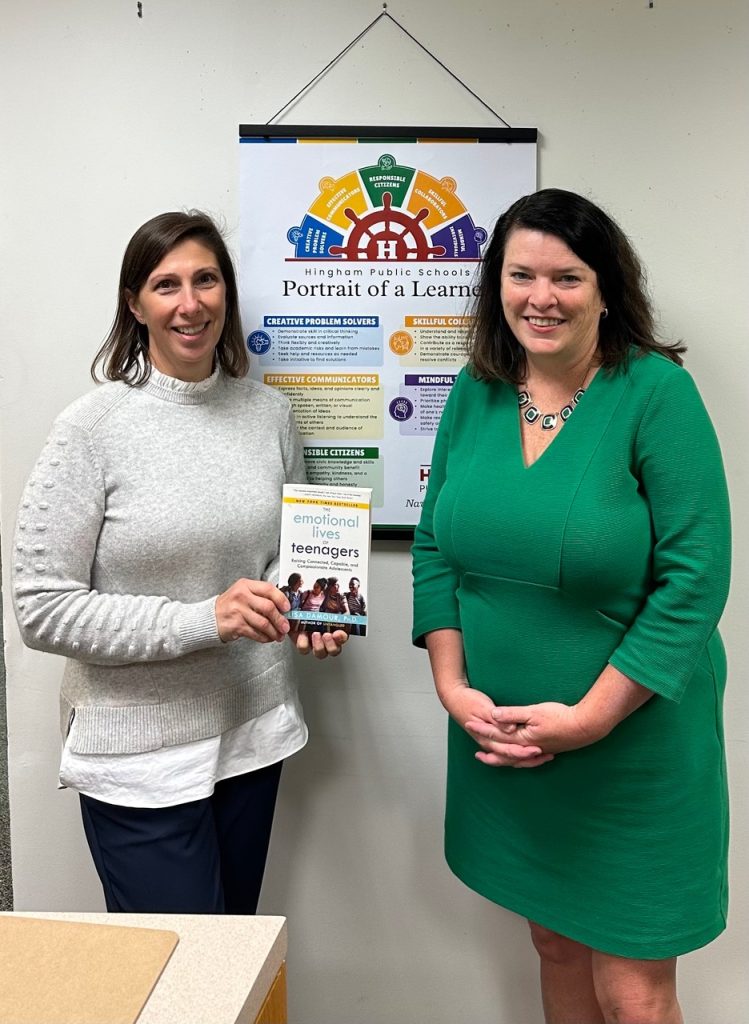
Dr. Damour shared several free resources on her website, drlisadamour.com, where parents can explore articles, topics, and her Ask Lisa podcast for practical, science-based guidance. The event recording is also available for those who couldn’t attend on the Hingham Public Schools website.
(https://www.hinghamschools.org/o/hps/page/fall-author-talk-2025)
Events like this one are part of a broader effort by Hingham Public Schools and the Town of Hingham, supported by the Town’s Opioid Settlement Funds, to strengthen the social-emotional well-being of students and families. These programs reflect a shared commitment to fostering a healthier, more resilient community.
Vanessa Webb is a Hingham-based parent coach and advocate for community well-being. If you’re interested inlearning more about strategies and tools to help parents stay steady while supporting their kids, visit vanessawebbcoach.com or find her on Instagram @vanessawebb.coaching.