

August 12, 2025 By Hilary Jenison (photos provided by Mike Brazis and Mark Fabbro)
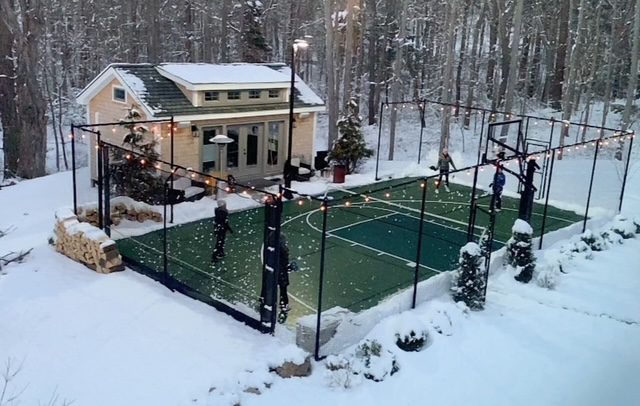
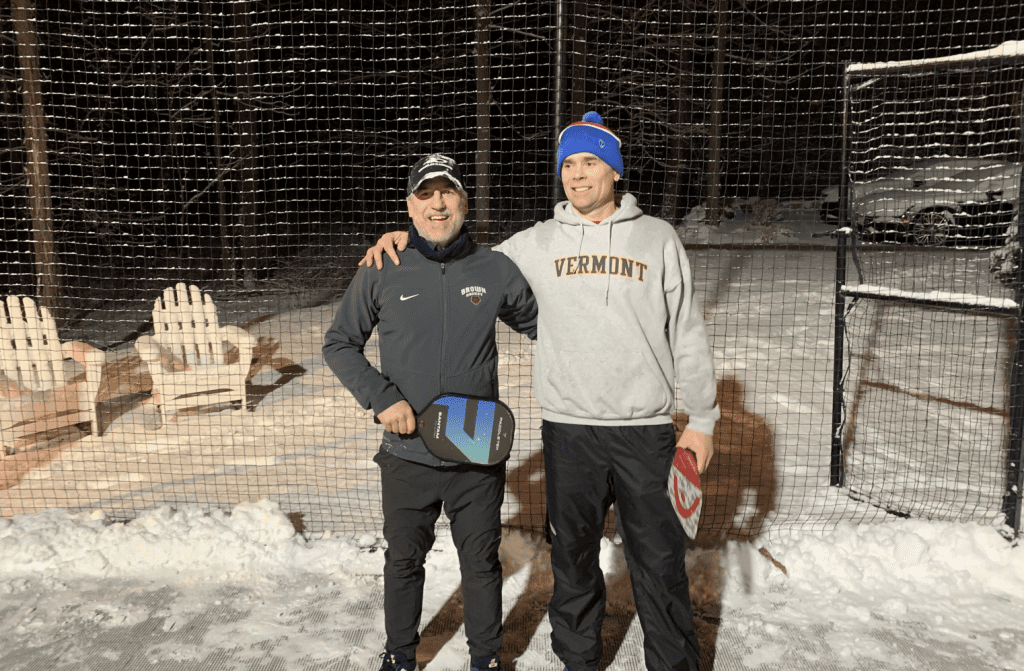
In the winter of 2020, when most of the world was locked indoors and longing for connection, a small, snow-covered court on Lazell Street, or Roller Coaster Road, as many lovingly call it, became the unlikely birthplace of something extraordinary.
Mike Brazis and some buddies had an idea.
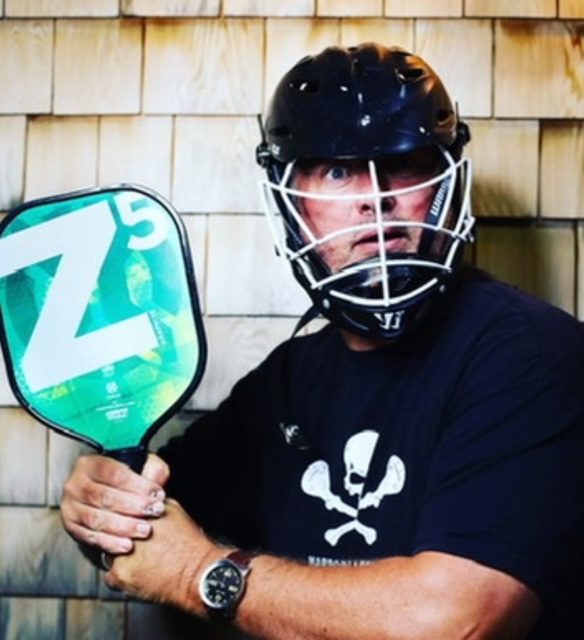
“Roller Coaster Road Pickleball Club (RCRPC) came out of dealing with life during COVID,” Brazis said. “A group of us thought it might be fun to get together on Tuesday nights to play. We were outside and could keep a responsible distance.”
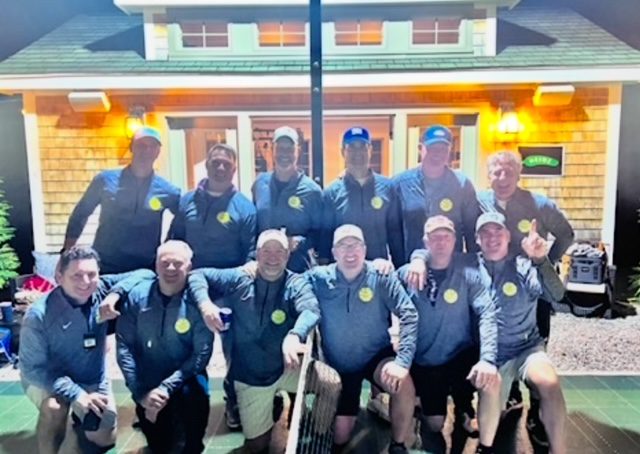
It started with a handful of friends, most of whom had never touched a paddle.
“None of us really knew what we were doing. I had only seen the game at my in-laws’ place down in Naples, Florida,” he said. “But within a month, we had about 30 people playing religiously, and it got us through those dark days of COVID.”
With fire pits blazing and music pumping, the group played through everything, blizzards, freezing rain, subzero temperatures.
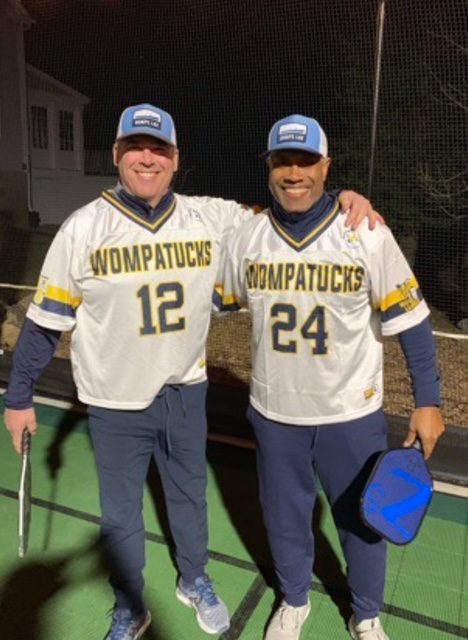
“We had guys who couldn’t tie their shoes and multiple former All-American college athletes playing,” Brazis said. “It was amazing.”
What started as neighborhood fun has grown into something no one could have predicted: a global movement with Olympic ambitions.
The Accidental Ambassador
Among the regulars in those early games was Mark Fabbro, a Hingham resident and sports marketing executive.
“I had no intent to make pickleball anything more than a weekly outlet. I just liked playing and competing with friends,” Fabbro said. “But pickleball felt different — fun, accessible, and surprisingly addictive. I had a hunch it would take off, but none of us imagined it would become the fastest-growing sport in the world.”
That passion, coupled with Fabbro’s sports marketing background, led him to a leadership role on the board of directors at USA Pickleball, where he began helping shape the future of the sport from rules and equipment standards to officiating and brand strategy.
“I met a couple of USA Pickleball board members and was impressed with the organization’s leadership in governing and growing the sport, from the official rules to equipment standards and testing to officiating certification to hosting national championships,” Fabbro said. “I wanted to leverage my professional experience in brand and business strategy and marketing to help the organization continue its growth trajectory and overall impact.”
“The sport has attracted significant investment and innovation over the last five years, and that has brought a level of chaos and competition,” he added. “USA Pickleball’s role in this rapid growth is crucial. Balancing the preservation of the sport’s integrity while promoting innovation and growth is a delicate balancing act. Especially with so many companies jumping in, it is a challenge to maintain the authenticity of the game.”
As the sport exploded across continents, so did the need for international coordination. In November 2023, Fabbro and other leaders from countries including the U.S., Canada, Mexico, Chile, Ghana and Australia founded the Global Pickleball Federation (GPF).
“International sport federations are essential organizations that help to guide, govern and grow sports globally,” Fabbro said. “Every major sport has a global governing body, and pickleball’s rapid and explosive growth warranted a strong, unifying international federation.”
Today, the GPF has more than 70 member national federations and is impacting all facets of the game.
The GPF works with USA Pickleball to provide the rules of the game, develop officiating programs, offer access to equipment through grants, generate content to help markets develop players and prepare for an official Global Championships in 2026.
The Olympic Dream
The GPF’s boldest ambition? Olympic recognition.
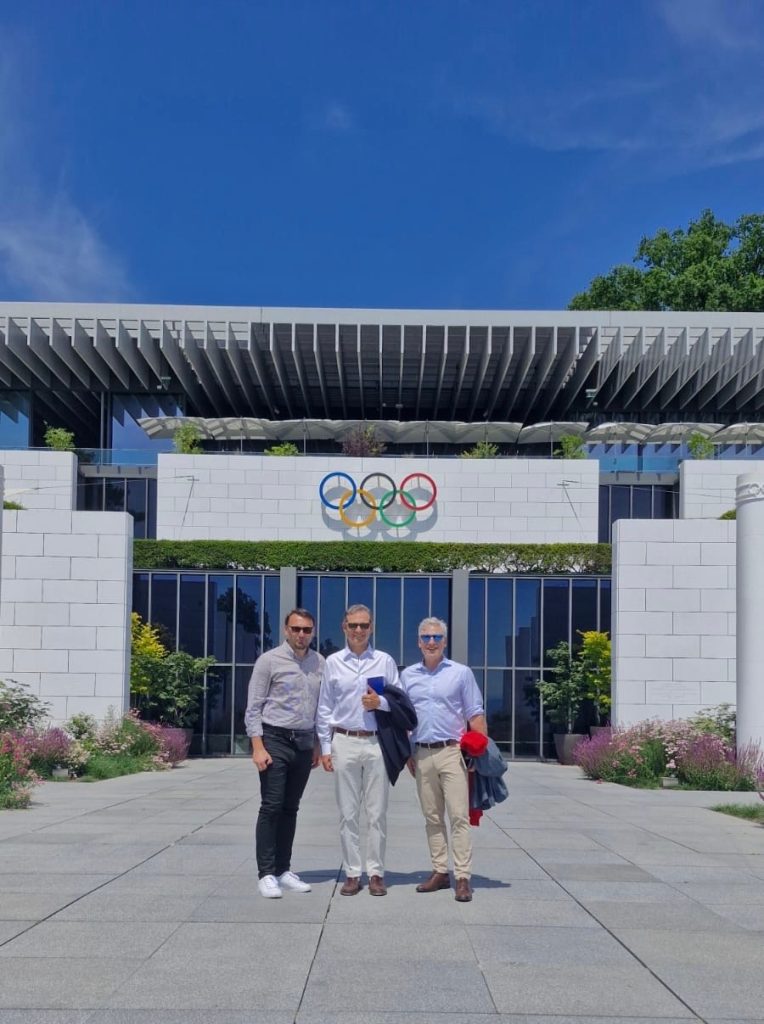
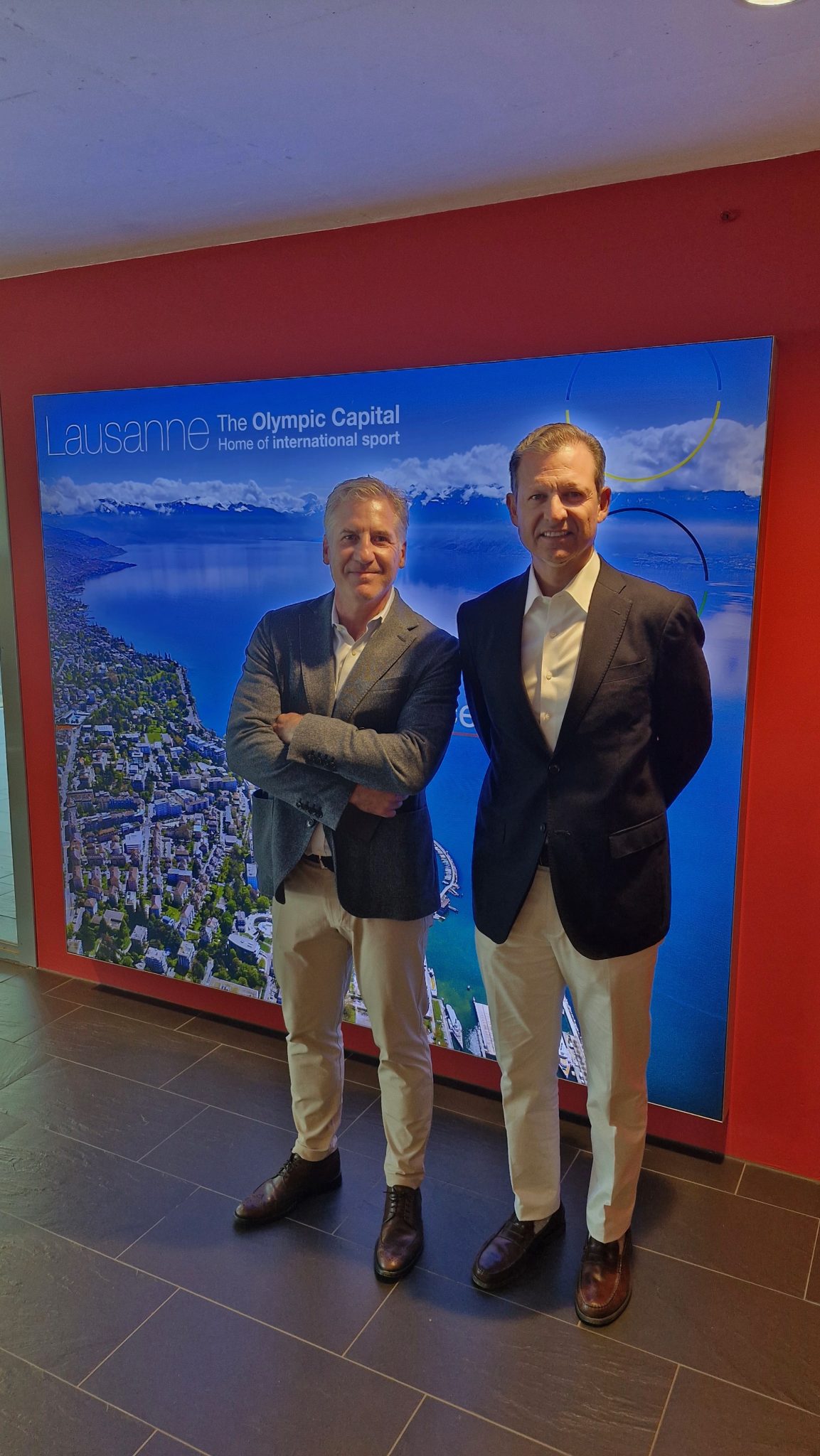
Earlier this year, Fabbro and his GPF colleagues traveled to Lausanne, Switzerland, the epicenter of the international sports world, to meet with International Olympic Committee representatives and begin the formal process.
“It was an incredible experience and an honor to represent the sport of pickleball in Lausanne, a beautiful city and the sport federation capital of the world,” Fabbro said. “It’s home to the International Olympic Committee as well as more than 70 international federations.”
“We had several productive meetings with different organizations and businesses,” he added. “During our session with the Lausanne Olympic Capital Foundation, we gained insight into the integrated sports ecosystem thriving in the city. It’s clear that both the GPF and pickleball itself could seamlessly fit into that framework.”
The group officially kicked off the process of gaining IOC recognition, with their eyes on the 2032 Summer Olympics in Brisbane, Australia.
From Backyard to Brisbane?
When asked if the original RCRPC crew would show up to the Olympics, Brazis didn’t hesitate.
“Roller Coaster Road Pickleball Club would absolutely go to the Olympics if pickleball got in,” he said. “We might need special visas and a security detail for us, but we would be there to support!”
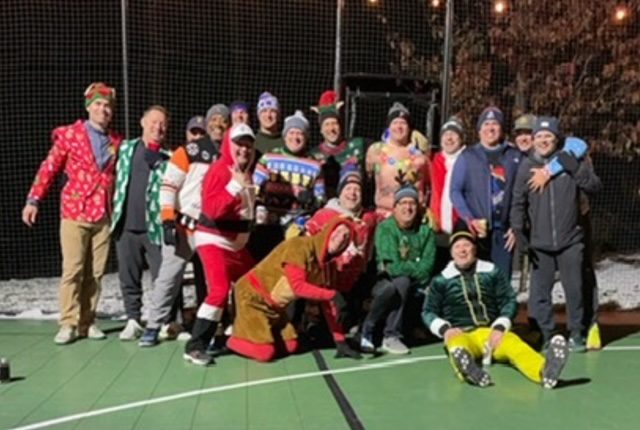
The club remains a tight-knit group of die-hard players and close friends. Their memories run deep.

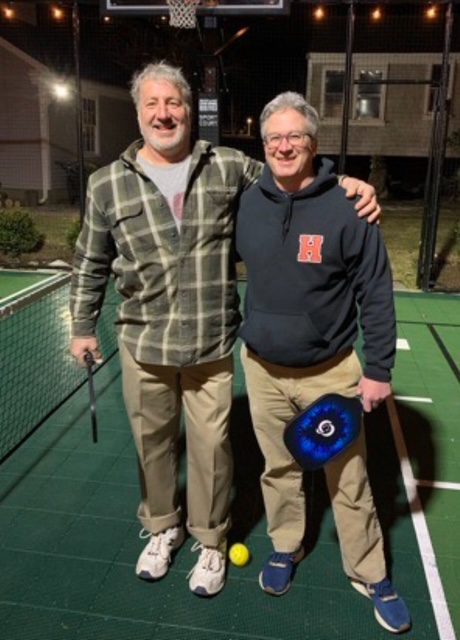
“One of my favorite memories was our holiday ugly sweater parties,” Brazis said. “We had Santa, Elf, Rudolph the Reindeer and your usual cast of super ugly sweaters — all playing pickleball in the snow.”
“Pickleball gave us joy when we needed it most,” Fabbro said. “Now it’s giving people around the world a sense of belonging, purpose and connection. That’s the magic of this sport.”
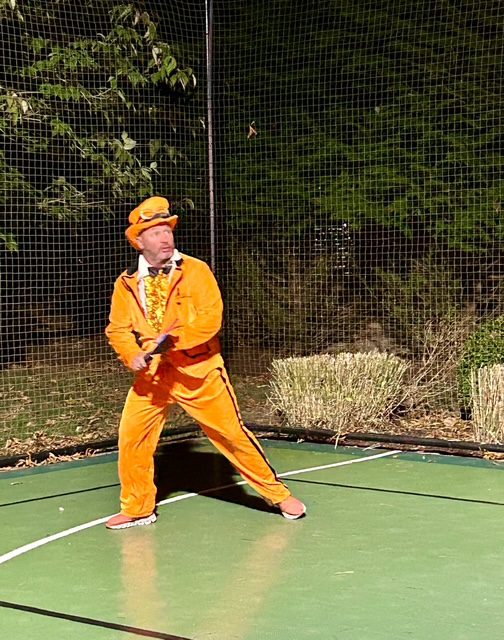
As for what his 2020 self would have said if told it would all lead to Olympic conversations in Switzerland?
“He would’ve laughed,” Fabbro said. “To go from playing in a snow-covered backyard court on Roller Coaster Road in an ugly Christmas sweater to presenting pickleball to the IOC — it’s been a wild ride.”

Love this story!!!
What an absolutely fantastic story. Thank you so much for sharing