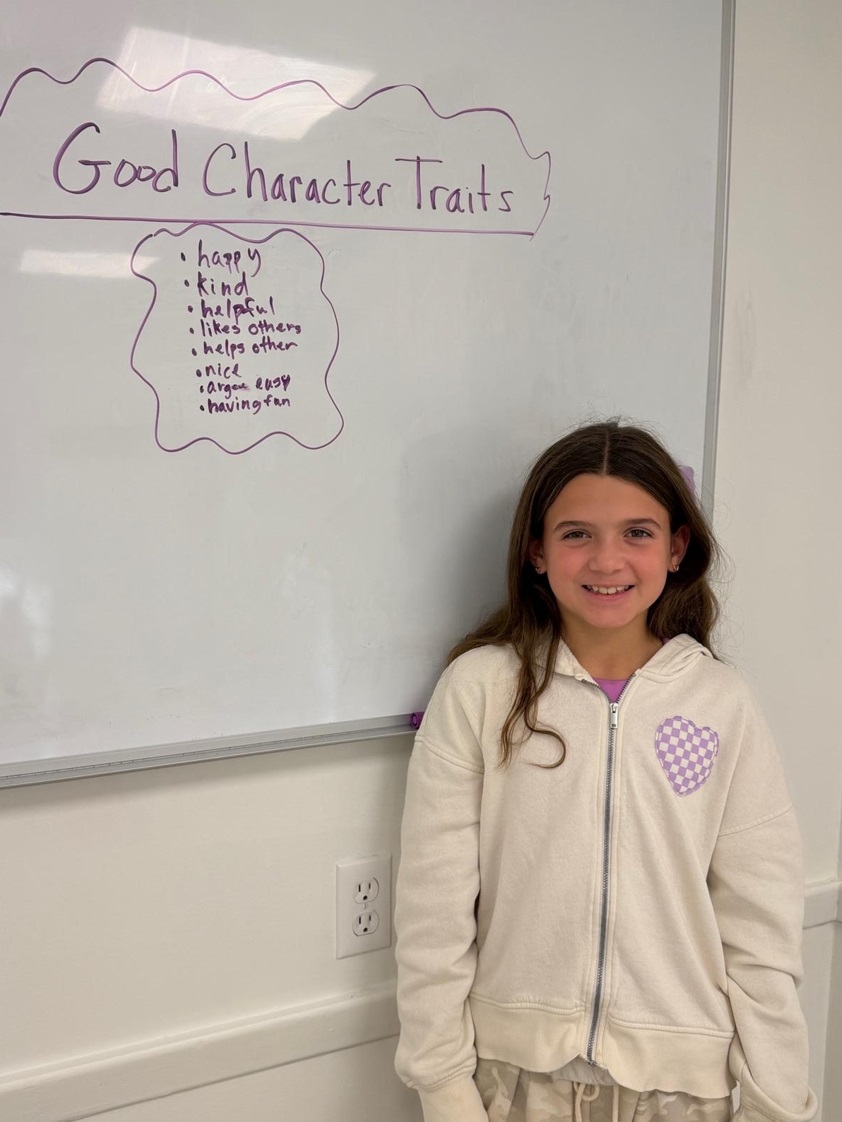
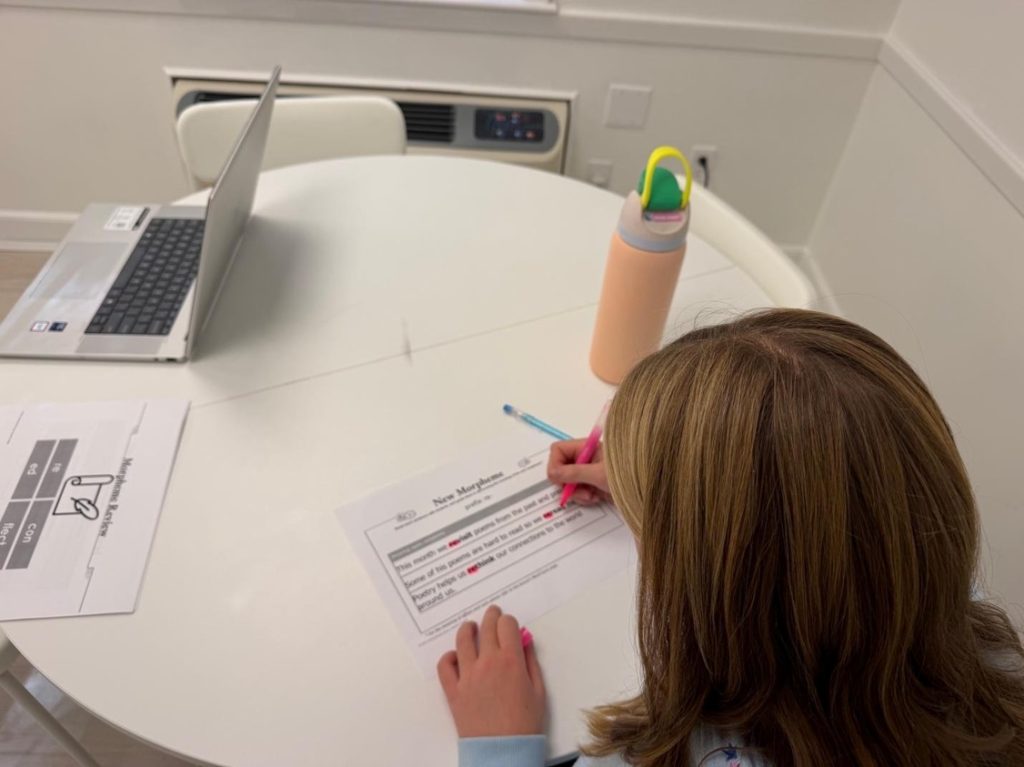
Fifth grade student working on language and reading comprehension at Harbor Education Strategies
October 29, 2026 Submitted By Laura Winters
During Dyslexia and DLD Awareness Month, the founder of Harbor Education Strategies urges families to look for signs of reading and language difficulties before kindergarten.
When Hingham parents worry that their preschooler is struggling to talk, rhyme, or learn letters, many of them end up in the same place: a bright office on Whiting Street, across the table from Dr. Melissa Ghiringhelli.
A speech-language pathologist with more than 20 years of experience at Mass General Brigham and in Massachusetts public schools, Ghiringhelli founded Harbor Education Strategies in 2023 to give South Shore families something she felt was missing close to home: expert, early help for young children before reading problems take root.
October is Dyslexia Awareness Month, and International DLD Awareness Day was observed on Friday, October 16. For Ghiringhelli, the month is an opportunity to share what two decades of clinical work have taught her: A child’s path to reading begins long before the first day of kindergarten.
“Reading is built on spoken language,” Ghiringhelli said. “The words a toddler hears, the stories a preschooler tells, the rhymes a four-year-old plays with at the kitchen table: that is the foundation. When something isn’t clicking in those early years, it’s usually our first and best clue.”
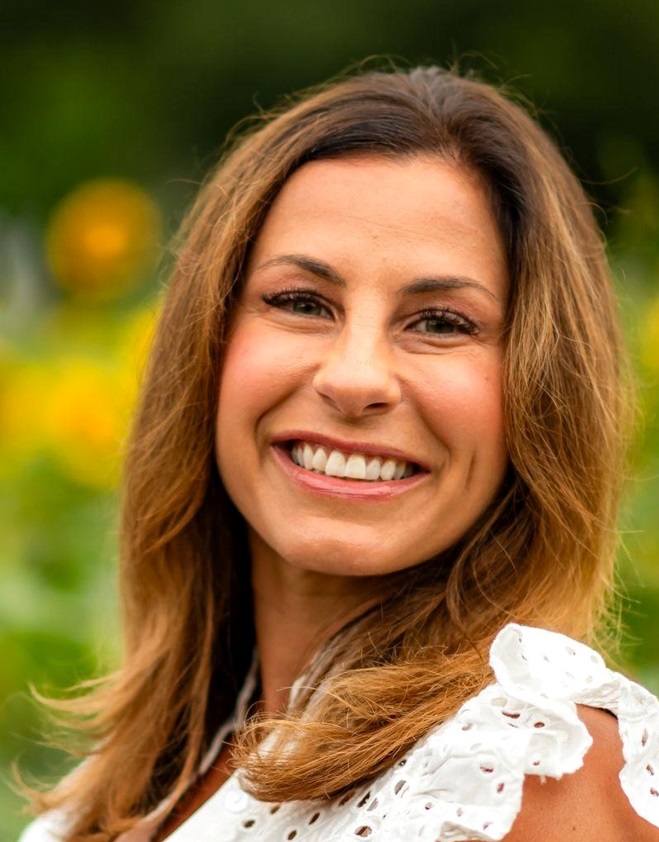
Photo caption: Melissa Ghiringhelli, SLP.D., CCC-SLP.
From MGH to Whiting Street
Ghiringhelli has practiced since 2003, most recently as a senior speech-language pathologist and literacy specialist at Mass General Brigham. She also spent nearly a decade in Massachusetts public schools, including Hingham’s.
She holds a Doctor of Speech-Language Pathology degree and a Reading Specialist certification from the MGH Institute of Health Professions, the graduate school founded by Massachusetts General Hospital. There, she trained in structured literacy under nationally recognized literacy experts Charles Haynes and Pamela Hook.
A Hingham resident and parent of three, Ghiringhelli said opening her own practice was a natural next step.
“In the hospital and in schools, I kept meeting children in second and third grade whose struggles could have been spotted at three or four,” she said. “I wanted a place right here in town where families could get answers early, from someone who knows both the clinical research and what a Hingham classroom actually looks like.”
Two Common, Often Hidden, Conditions
Developmental language disorder (DLD) is a lifelong difficulty learning, understanding, and using spoken language. It is not caused by hearing loss, autism, intellectual disability, or a lack of exposure to language.
Research suggests that roughly 7 percent of children have DLD, or about two children in every kindergarten classroom, yet the condition remains widely unrecognized.
“Most parents have never heard the term DLD, even though it’s more common than autism,” Ghiringhelli said. “These kids often have many strengths, and their challenges may go unrecognized or be misinterpreted as shyness, inattention, or a lack of effort.”
Dyslexia is a specific learning disability that affects accurate, fluent word reading and spelling. It is rooted in how the brain processes the sounds of language, not in intelligence, vision, or effort. Estimates generally place its prevalence at 5 to 10 percent of the population, with many more people showing some of its features.
The two conditions are distinct but frequently occur together: About 50 percent of children with one also have the other. Both tend to run in families.
“That overlap is exactly why we look at the whole child,” Ghiringhelli said. “A preschooler with language weaknesses should be watched closely for reading difficulties, and a child who struggles to read deserves a careful look at their spoken language. If a parent or sibling had trouble with reading or speech, that’s important information.”
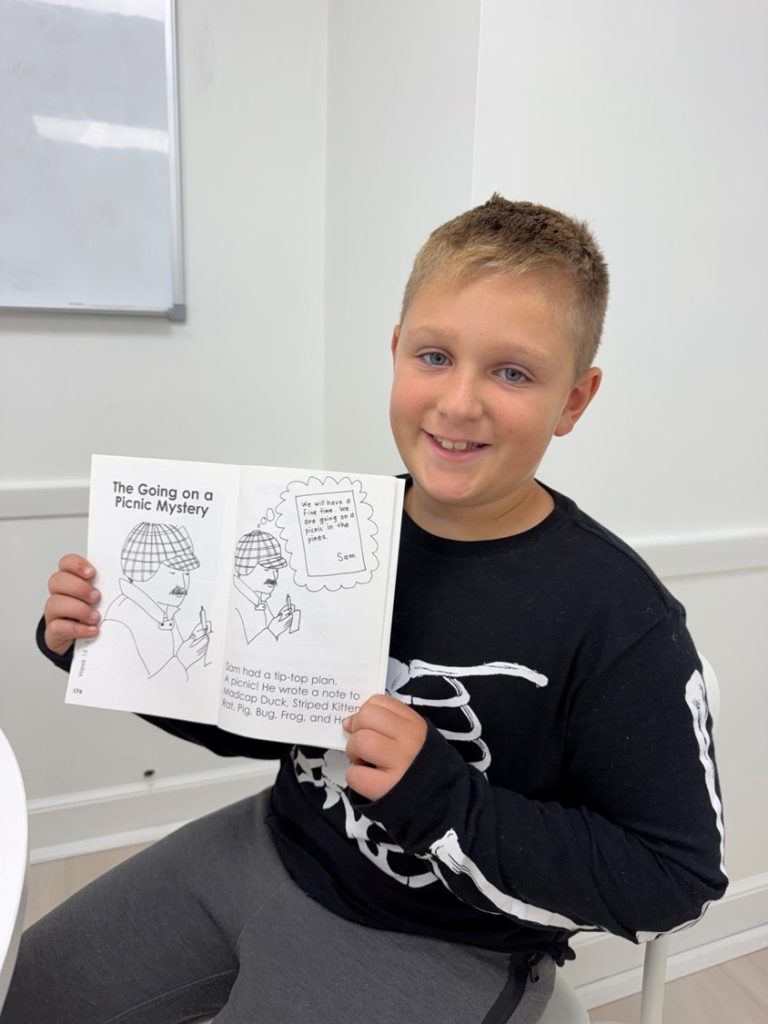
Photo caption: A second-grade student works on decoding and reading fluency.
What to Watch for in Preschool and Pre-K
No single sign means a child has DLD or dyslexia, but Ghiringhelli says a pattern of the following signs, especially alongside a family history, is worth a closer look:
- Talking later than peers or using shorter, simpler sentences than other children the same age.
- Grammar errors that persist, such as “him going” or “she walk” at age four.
- Trouble following directions, answering “why” and “how” questions, or retelling a simple story in order.
- Difficulty finding the right word or relying on words such as “thing” and “stuff.”
- Little interest in rhymes or trouble telling whether two words rhyme.
- Difficulty learning letter names and their corresponding sounds, even with practice.
- Trouble clapping out syllables or noticing that “ball” and “bat” start with the same sound.
- Mixing up sounds in longer words well beyond the toddler years, such as saying “aminal” instead of “animal” or “pasghetti” instead of “spaghetti.”
“Parents are almost always the first to notice that something feels different,” she said. “I tell families to trust that instinct.”
Why ‘Wait and See’ Doesn’t Work
Families are often told that a child will grow out of a difficulty or that it is too early to tell. For some late talkers, that proves true. For children with DLD or a risk of dyslexia, however, research consistently shows that waiting can allow the gap to widen. Intervention is most effective, and often takes less time, when it begins before or at the very start of formal reading instruction.
“A preschooler who gets support with vocabulary, sentence structure and sound awareness walks into kindergarten ready to learn alongside classmates,” Ghiringhelli said. “A third grader who is just being identified has to catch up while also carrying frustration, and often a belief that they’re ‘not smart.’ We can spare kids that.”
Massachusetts now requires public schools to screen young students for reading risk, a step Ghiringhelli applauds. But school screening begins in kindergarten, leaving the preschool years largely up to families. That gap is the one Harbor Education Strategies was built to fill.
Inside Harbor Education Strategies
The practice serves children of all ages, from early childhood through adolescence, and offers both diagnostic and therapeutic services under one roof.
Diagnostic services include early language and literacy screenings; early literacy and dyslexia risk assessments covering rhyming, sound awareness, letter knowledge, and rapid naming; and comprehensive speech-language and literacy evaluations. Every evaluation ends with a detailed written report and a parent meeting to review the results and discuss next steps.
Therapeutic services include individual speech-language therapy; literacy intervention grounded in structured literacy and the science of reading; small-group language treatment and enrichment for preschoolers; kindergarten-readiness support; and parent coaching to help families carry strategies over into the home.
“Early childhood intervention is one of my favorite things we do,” Ghiringhelli said. “Some children come for targeted support and some simply for a language-rich head start, but all of them are learning to listen, talk, take turns and play with words while engaging in fun activities. It doesn’t feel like therapy to them. It feels like play.”
Because evaluation and treatment happen in the same place, the clinician who identifies a child’s needs is part of the same team that helps meet them.
“Parents shouldn’t have to take a report from one office and start over with a new clinician somewhere else,” Ghiringhelli said. “When we evaluate a child, we already know them when therapy begins, and the family knows us.”
Advice for This October
“My advice this October is simple,” Ghiringhelli said. “Read with your child, play with rhymes, and trust your gut. If something feels off, reach out. A conversation now can save years of struggle later.”
Harbor Education Strategies is located at 188 Whiting Street, Suite 9, in Hingham and also offers teletherapy to nearby communities. No referral is needed.
For more information, visit www.harboreducationstrategies.com, call 978-621-7230, or email melissa@harboreducationstrategies.com.