September 22, 2026 Submitted By Jennifer Burtner (16 Powers Lane, Hingham)
“I am haunted by waters.” – Closing line from Norman Maclean’s A River Runs Through It and Other Stories
Significant Changes to Hingham’s Wetland Regulations Are Being Proposed…and make no mistake, these changes are reducing protections, not increasing them. Before our local government changes the rules protecting our wetlands, residents deserve to understand why this is happening now and what may be lost if town representatives vote to do it.
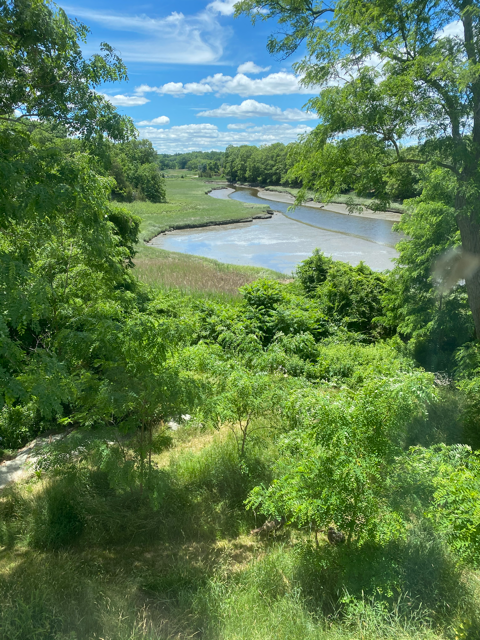
I have lived beside the Weir River my entire life. For decades, my family and I have walked its banks, watched its tides and seasons, worked on conservation efforts, and monitored bird populations in this extraordinary corner of Hingham.
For us, the Weir River is not simply the name of a water company or a beautiful backdrop. It is part of a larger coastal ecosystem and an important migratory pathway for birds along the Atlantic Flyway. Its marshes, wetlands, streams, forests and open spaces are interconnected pieces of a living system upon which we all depend.
This year, as Hingham grapples with drought and debt, falling water levels and rising taxes, the Conservation Commission has been moving forward with a comprehensive update to its wetlands regulations. The proposed revisions include new definitions, revised performance standards, changes to floodplain provisions, new exemptions, expanded administrative review, a proposed waiver provision, and changes to abutter notification and participation, as well as to Riverfront Areas.
The Town says these revisions are intended to modernize and reorganize the regulations, more in line with weaker State protections. But rather than increase the protections Hingham voters deliberately chose to adopt through Town Meeting, these proposed changes would reduce protections—opening new areas to construction and development and placing additional stress on our already strained water resources.
Hingham’s current local wetlands bylaw was adopted to protect additional resource areas and values, with standards stricter than state regulations. That local choice matters, particularly to a historically maritime community with such valuable and fragile coastal areas.
So why are we changing those stronger protections now, at a time when water scarcity and the quality of that resource are such pressing issues?
Consider the proposed change to Riverfront Areas. Existing protections recognize the outer boundary of an adjacent Bordering Vegetated Wetland when measuring Riverfront Area along non-tidal rivers. The proposed language would remove that additional protection. That may sound merely technical, but it isn’t.
Riverfront areas help protect groundwater, control flooding, filter pollutants, support wildlife and maintain water quality. Natural vegetation and soils allow rainfall to infiltrate the ground and help sustain water supplies. The buffer is not empty space.
When land is cleared, graded or covered with impervious surfaces, more water runs off quickly instead of soaking into the ground, carrying sediment and pollutants toward streams and estuaries. Our coastal wetlands and estuaries slow and filter runoff while providing critical wildlife habitat. When we damage these systems, we weaken the infrastructure that nature provides for free.
And this is happening while Hingham is already confronting significant water challenges. Everyone has seen the drought and water-ban signs, received the emails, the phone messages, and read the public notices. We have experienced restrictions on water use and watched concerns about water supply become increasingly urgent.
If we do not have enough water for the people who already live here, why would we adopt policies that facilitate and expand additional construction and development while reducing protections for the very lands that help recharge our aquifer and protect our waterways? To do so is more than an economic or political question. It is a serious and potentially dangerous environmental and community concern.
There is also the issue of public participation. The proposed changes would allow more matters to be handled “administratively” and reduce opportunities for public hearings and abutter notification. Abutters are often the people who know the land best. They know where water goes after a storm, where flooding occurs and where a wetland stays wet—or suddenly doesn’t.
Public hearings and abutter notification are not obstacles to efficient government. They are how a community’s eyes and ears become part of decision-making. Reducing those opportunities diminishes transparency and citizens’ rights to democratic participation involving decisions affecting their water, health, homes, and quality of life.
Over the years, we have watched both Hingham and the living water systems that sustain it change. And we have learned something that anyone who spends enough time in nature eventually understands: nothing exists in isolation.
The wetland beside the river is connected to the river. The river is connected to the estuary. Wetlands and soils are connected to groundwater. Groundwater is connected to our water supply. What happens on the land eventually affects our waterways, and those effects cycle back through our surface and subterranean water resources.
When a natural system is already stressed, we should not make changes that further weaken its ability to stabilize itself and continue functioning in the future.
For these and other reasons, I am deeply concerned about Hingham’s proposed changes to its Wetland Regulations. After attending numerous meetings, watching question-and-answer sessions, and speaking with professionals and local stakeholders, my concerns have only increased.
People are asking: Why is this rewrite really happening? And why now? When we look closely at the proposed changes, many are asking: Who do these changes really benefit? Whose opinions and participation will be diminished once they are approved? And how will these changes help address the water crisis Hingham is currently facing?
This is not who we are. This is not how we do things. And this is not what we want.
The next public hearing on the proposed Wetland Regulations is September 28. I hope Hingham residents will take the time to understand what is being proposed, attend this meeting and make their voices heard. The Commission continues to identify the revisions as under consideration and has invited public comment.
The time to speak up and say “no” is now, because once these protections are gone, we cannot simply administratively regulate our way back to the river, the wetland, the aquifer or the forest we once had.
September 28, 2026
Conservation Commission
Website: https://zoom.us/join
Meeting ID: 825 1522 3257 Dial-in number: 929-205-6099
Send your comments on the proposed changes to: conservation@hingham-ma.gov