


April 15, 2026 By Jennifer Burtner
As Sebastian Junger wrote in The Perfect Storm, disasters at sea are rarely caused by a single force. They arise when multiple systems—weather, pressure, timing—converge at once, overwhelming even the strongest vessel. The fate of the Andrea Gail was not sealed by one bad decision, but by many—stacked one upon another—until there was no way out.
Today, Hingham is charting a similar course.
As voters consider the proposed Center for Active Living, it is critical to evaluate this project within the full financial, infrastructure, and environmental realities facing the town today—because Hingham is, in many ways, sailing directly into its own perfect storm.
Over the past decade, Hingham has taken on a series of major capital commitments that have materially increased both property taxes and user costs. Projects such as the Foster Elementary School and the Public Safety Facility added tens of millions in long-term debt. At the same time, enterprise systems—electric and water—have shifted growing costs directly onto residents through rate increases.

Individually, each decision may have seemed reasonable. But together, they are converging—like storm fronts gathering offshore.
Town financial projections indicate that existing obligations alone are expected to drive property taxes up approximately 16–17% over the next five years. The proposed Center for Active Living would add an additional ~1.5–2% increase. For a median Hingham home value estimated near $1 million, this translates to roughly $1,200–$1,800 in additional annual property taxes when combined with existing increases—before factoring in future capital projects.
Below the surface, another system is churning.
The Town’s acquisition of the Weir River Water System has introduced substantial and ongoing financial obligations. Since taking control in 2021, the Town has already invested over $14 million in capital improvements, including pipe replacements, hydrant upgrades, and treatment facility work. Yet much of the infrastructure remains aging and difficult to fully assess—like unseen hazards beneath dark water.
A proposed FY2027 increase would raise the average residential water bill by approximately 7–8%, including a 3% rate hike and a new $65 annual capital charge for decades. Long-term planning documents anticipated recurring rate adjustments and significant unknown liabilities. Earlier legal and valuation proceedings placed the potential cost of the system itself in the tens of millions, underscoring the scale of the risk.
At recent public meetings, officials have emphasized that these increases are necessary to fund “needed improvements, upgrades, and operation and maintenance.” In practical terms, this means continued brown water, disruption, construction, and rising costs for residents as the Town struggles to stabilize an aging system.
And still, more pressure builds.
Hingham faces a growing backlog of critical capital needs. Hingham High School is experiencing major mechanical system failures. Plymouth River and East Elementary Schools require significant structural repairs, including roof replacements. These are not discretionary projects—they are essential to maintaining basic public services.
At the same time, the proposed Center for Active Living would permanently convert approximately 5.3 acres of Bare Cove Park – a 484-acre protected conservation area—into developed land. This includes tree clearing, habitat loss, and long-term environmental disruption within a sensitive ecosystem along the Weymouth Back River.
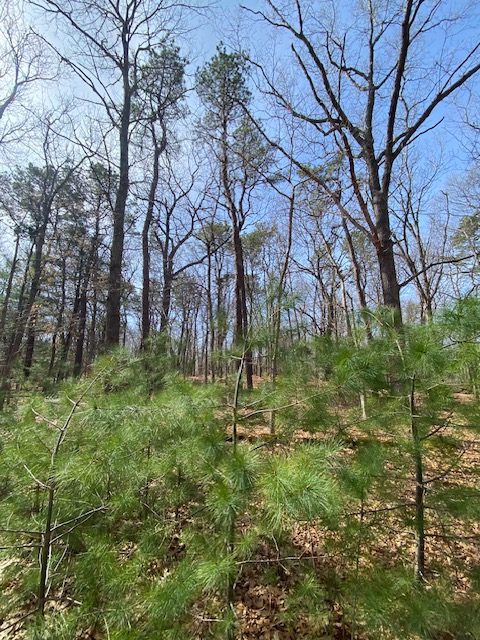
This land is protected under Article 97, which requires legislative approval and strict mitigation standards for any conversion of conservation land. While a land swap has been proposed, concerns remain about whether replacement acreage can truly offset the ecological value of the original site.
At sea, a capable crew respects the limits of both their vessel and the conditions around them. But overconfidence—especially in the face of gathering risk—can be fatal.
Right now, so many of those on Hingham’s boards and in leadership roles are acting less like cautious navigators and more like overconfident captains—taking on more sail, more speed, more risk—while the barometer is falling. They are steering the town into heavier seas, asking residents to trust that everything will hold.
But many of us know better.
I live in a 250-year-old house built by shipbuilders—men and women who understood the sea not as an abstraction, but as a force that demands humility. They built vessels to endure, not to impress. They knew when to push forward—and when to turn back.
And I have no doubt that those who built the home I live in would warn against boarding a ship under this kind of command.
They would tell us to read the conditions. To respect the limits. To avoid unnecessary risk when the waters are already turning.
Because this is not just one project. It is the convergence of many.
Rising taxes. Escalating utility costs. Aging infrastructure. Environmental loss. Each one manageable on its own—perhaps. But together, they form something far more dangerous.
A perfect storm.
The issue before voters is not whether the goals of the Center for Active Living are worthwhile—they are. The issue is whether this is the right moment to take on another major burden.
It is not.
Now is the time to speak clearly—to take hold of the wheel and chart a more sustainable, safer, and steadier course through these turbulent waters and turbulent times.
Because if we do not—if we continue forward, adding weight and strain while ignoring the warning signs—we risk more than higher taxes or inconvenience.
We risk running this ship onto the rocks.
And once that happens, there is no easy way back.
For these reasons, I urge voters to weigh the full picture—and vote no on the current proposal.
Amen. “Spend, spend, spend, tax, tax, tax” is not a prudent financial strategy. Interest rates are up. The days of cheap money are over. With age comes the wisdom, that if you cannot buy it outright, then don’t. Keep raising the taxes, the elderly will have to leave Hingham, along with everyone else who don’t live in a McMansion.
As an eighty-one year old, 79 year resident of this town my opinion is simply that the town can not afford another multi million dollar expenditure at this time. Infrastructure costs for such simple things like street maintenance/paving, school/building repairs, water and electrical system repairs/operation must take precedence. Throughout Massachusetts there are numerous examples of cities/towns that are spending way above their means and are headed towards significant financial pressure. Hingham is becoming one of those towns with the number of recent high cost capital expenditures added to its long term debt. It is time to take a pause and lay out goals that will not force residents to pack up and leave. We should look at the past and learn from it during this 250th birthday and note that the Old Ship Church was built in 1681 and still stands and works 340 years later.
A wonderful analysis of the disaster into which we’re sailing. Than you, Jennifer, for the metaphor and the warning!