

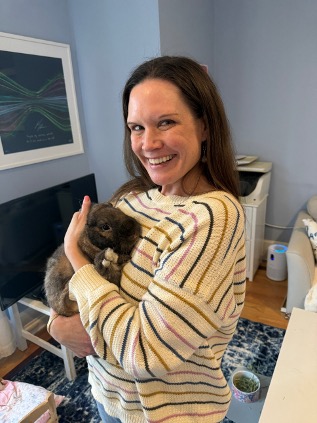
April 3, 2026 by Community Editor Erin Elefante (photos provided)
Hingham resident Alyssa Stone, creator of the @debbieandelliethebunnies Instagram account and a devoted bunny mom, has an infectious love for rabbits. We recently caught up with her to meet her sweet pets and learn more about her passion, what bunnies are like as companions, and how residents can support rabbit rescues in Massachusetts.
Eight years ago, when Stone’s then-preschool-aged daughter Sadie was enrolled at Miss Donna’s Place, the family cared for a bunny for a weekend. By the end of those few days, they were completely enamored. Soon after, a rescue Lionhead bunny named Frank joined their family, followed by Debbie, a lop bunny. The two were inseparable—“husband and wife,” as Stone described them. After Frank’s passing, Debbie needed a companion. Today, she is bonded with Eloise, a Dutch bunny Stone lovingly calls her “sister.”
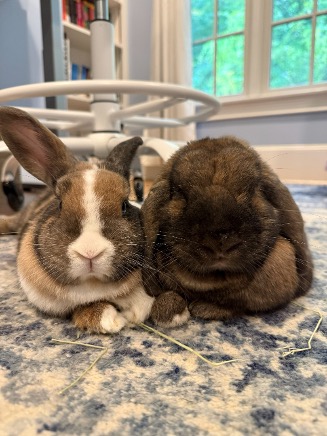
“Bunnies can’t live alone; they’re not supposed to,” Stone explains. “They really should live in pairs.” Once bonded, rabbits typically stay that way for life and can often be found cuddled together. “When one needs to go to the vet, I bring them both because they comfort each other.”
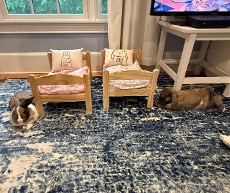
Stone’s bunnies enjoy five-star accommodations, complete with beds, monogrammed pillows, digging mats, puzzles, and other accessories. Their daily lives—and adorable photo ops—can be followed on Instagram.
Still, Stone emphasizes that adopting a bunny requires careful consideration. “If you’re looking for a lap animal, a bunny is not that,” she says. Unlike some pets, rabbits do not instantly bond with their owners. Because they are prey animals, they tend to be cautious and can take six months or more to build trust. “But that makes the relationship even more special once they do,” Stone adds.
While they may sit beside you while you relax, rabbits are unlikely to stay in your lap for long. What they lack in cuddliness, however, they make up for in personality. “They’re cute and funny,” Stone says. “They’ll spontaneously jump into the air when they’re happy—it’s called a ‘binky.’” Along with bursts of energetic “zoomies,” their quirky behavior makes them endlessly entertaining pets.
Stone volunteers monthly at House Rabbit Network, a rescue organization in Westford. She first discovered the group while adopting Eloise and immediately felt a connection. “The people there are so kind, and they love the bunnies so much. It’s the happiest place on Earth for me,” she says.
With a background in communications, Stone contributes by connecting with donors who sponsor rabbit “condos” with monthly contributions. She provides updates and photos, helping supporters stay engaged with the animals they’re helping to care for.

Recently, the organization held a Valentine’s Day-themed photo shoot featuring bonded pairs—rabbits who are already matched with a companion. These pairs can be harder to adopt, as many people initially seek a single pet. However, Stone notes that adopting a bonded pair is often ideal, as the bonding process can take months. These rabbits share larger enclosures, enjoy constant companionship, and would thrive in a loving home together.
For those considering adoption, Stone says the process is thorough. Prospective owners must demonstrate they can provide a safe, appropriate habitat, including a space large enough for an adult to stretch out fully. Homes must be carefully “bunny-proofed”—even more so than baby-proofed—as rabbits are natural chewers and will seek out cords and other hazards.
Like cats, rabbits can be litter box trained. Adoption organizations will also ask about household members, daily schedules, travel plans, and feeding knowledge to ensure a good fit. An in-person interview is typically required.
Many rabbits in shelters are not there due to behavioral issues, but rather because of unexpected litters or owners who underestimated their care needs. “There are so many cute, adoptable bunnies,” Stone says.
She also cautions that rabbits can be messy and require specialized veterinary care, which can be costly. Diet is another common misconception—contrary to popular belief, rabbits should not eat carrots! A healthy diet includes fresh hay, leafy greens, daily cilantro, and pellets.
Understanding these responsibilities is key to ensuring a good match for both the rabbit and the owner. As Stone’s experience shows, the time and care invested in these animals can lead to a deeply rewarding bond.
Stone lives in Hingham with her husband, Chris, and their children, Sadie, 14, and George, 11. To learn more about adoptable rabbits or to sponsor a “condo,” visit www.rabbitnetwork.org. You can also follow the adventures of her bunnies on Instagram at @debbieandelliethebunnies.